

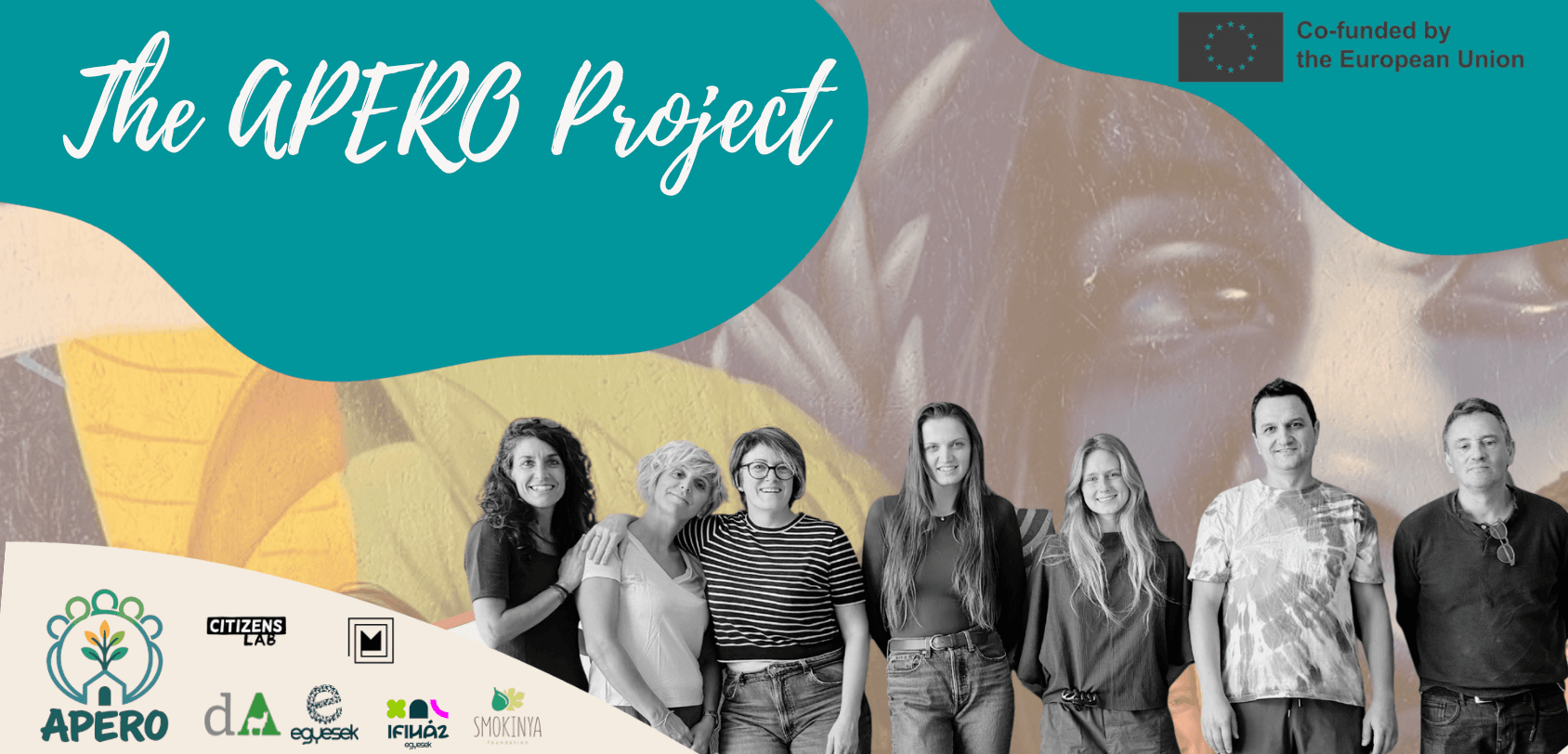
APERO is a European cooperation project connecting grassroots civil society communities from Germany, Spain, Hungary, Bulgaria and Serbia. The partnership’s shared aim is to exchange experiences and good practices in youth work, community building, volunteering, sustainable community spaces and organisational development through job shadowing.
Our colleagues took part in professional exchange visits in several partner countries. In Berlin, our communications specialist, Vivien Bence, joined a programme organised by CitizensLab and explored how communication can be understood not merely as a way of sharing information, but as an important tool for engaging young people and building communities. The joint work focused on authentic and inclusive communication, storytelling, the conscious use of digital platforms and creating space for genuine dialogue.
In Spain, our youth workers from Szécsény, Veronika Klincsok and Eszter Papp, joined de Amicitia’s “Big in Japan” workcamp. They got to know the organisation’s volunteer house, took part in school activities and programmes at a residential home for older people, visited the Youth Centre in Pego, and also met the town’s mayor. Their conversation with Ignacio, the head of de Amicitia, was particularly valuable. They discussed how workcamps operate, the autonomy of camp leaders, the involvement of local resources, and how effective methods can be passed on to new participants and groups.
In Bulgaria, our youth support worker based in Szécsény, Janka Becsey, took part in a three-day exchange at the Smokinya Foundation. She chose the organisation because its work is similar to that of Egyesek in several ways: it operates in a rural environment, involves young people and volunteers in its activities, and is also developing a community space. Janka learned about Smokinya’s work with European Solidarity Corps volunteers and Erasmus+ programmes, joined the team’s daily coordination, visited the office in Plovdiv, and travelled to the youth centre currently being developed in the village of Mrachenik. Practical tasks such as chopping firewood, moving equipment and maintaining shared spaces showed how taking responsibility and working together can themselves become important learning processes.
APERO, however, was not a one-way learning process. Egyesek also hosted colleagues from Bulgaria, Germany and Serbia for job-shadowing visits in Hungary, giving them first-hand insight into youth work in Szécsény, the operation of the Ifiház youth centre, cooperation with local communities and the methods used by Egyesek. Their questions and feedback also gave us new perspectives and an opportunity to look at our own work with fresh eyes.
The final phase of the project took place in Serbia. Representatives of the five partner organisations met in Belgrade, where they jointly evaluated APERO’s results, challenges and most important lessons. From there, they travelled together to MAGNET House in Veliki Gaj, run by the Serbian partner organisation. This rural cultural and community space provided an ideal setting not only to bring the project to a close, but also to begin discussing what comes next. The partners explored ideas for future joint projects, professional cooperation and new partnership opportunities.
For us, one of APERO’s most important lessons is that successful youth and community work is built on trust, responsibility, clear frameworks and meaningful participation. The project was not about simply copying ready-made solutions, but about learning from one another’s practices and adapting what we experienced to our own local realities. These experiences will continue to shape the work of the Ifiház youth centre, our support for young people and volunteers, our communication, and the international partnerships developed through the project.
